
Ryder Cup Betting System UK: How Match Play Format Rewrites the Rules for Golf Bettors
 Available in US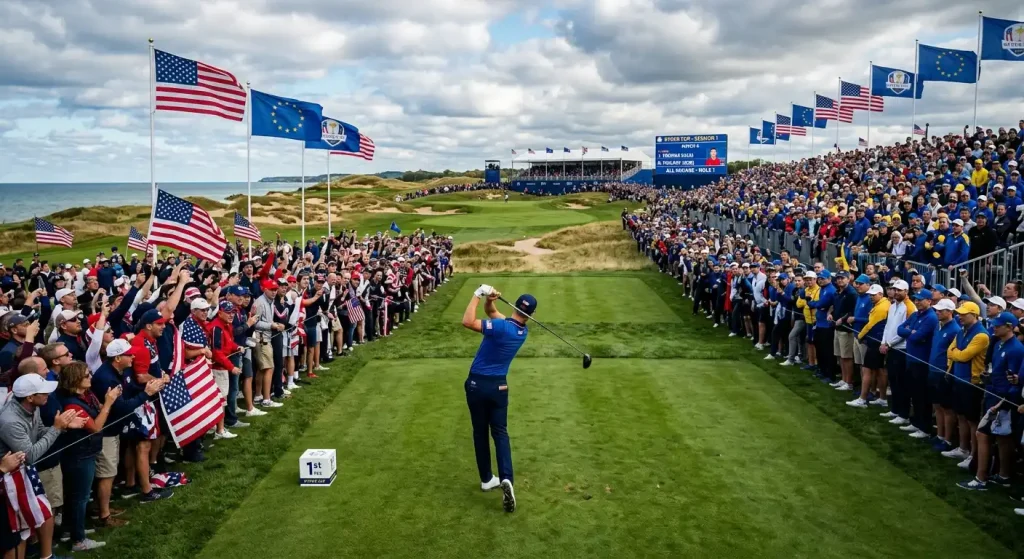
I’ve bet every Ryder Cup since 2014. My record through 2023 was erratic in a way that puzzled me until I figured out why: I was importing my stroke play analytical framework wholesale into a match play event that operates by entirely different rules. The Ryder Cup is not a tournament where the best players win. It’s a tournament where the best-managed teams, the most psychologically resilient pairings, and the home venue advantage combine to produce outcomes that are structurally different from anything in individual stroke play. Understanding that distinction properly, and building a betting approach around it, took longer than I’d like to admit.
Match Play Betting vs. Stroke Play: Why Your Outright System Doesn’t Transfer
The most fundamental shift in Ryder Cup betting is how variance operates. In stroke play over 72 holes, cumulative SG performance across the field generates a reliably accurate result for the best players over the sample. Variance is high per round but averages out across 72 holes. In match play over 18 holes, a single unlucky bogey at the right moment—or a single clutch putt by the opponent—can determine an entire match outcome regardless of the broader SG distribution. The player who loses a 1-up match may have outdriven their opponent on 12 holes and generated more birdie opportunities. They still lost.
This fundamental difference in how match play resolves outcomes means that SG-based analysis—the central engine of my stroke play betting system—provides a much weaker signal in Ryder Cup match analysis. A player who ranks in the 95th percentile of tour SG:APP is not proportionally better in match play than a player in the 80th percentile. The difference in hole-by-hole outcome probability is much smaller than the SG gap would suggest, because match play’s binary hole resolution compresses the advantage that sustained ball-striking creates in stroke play.
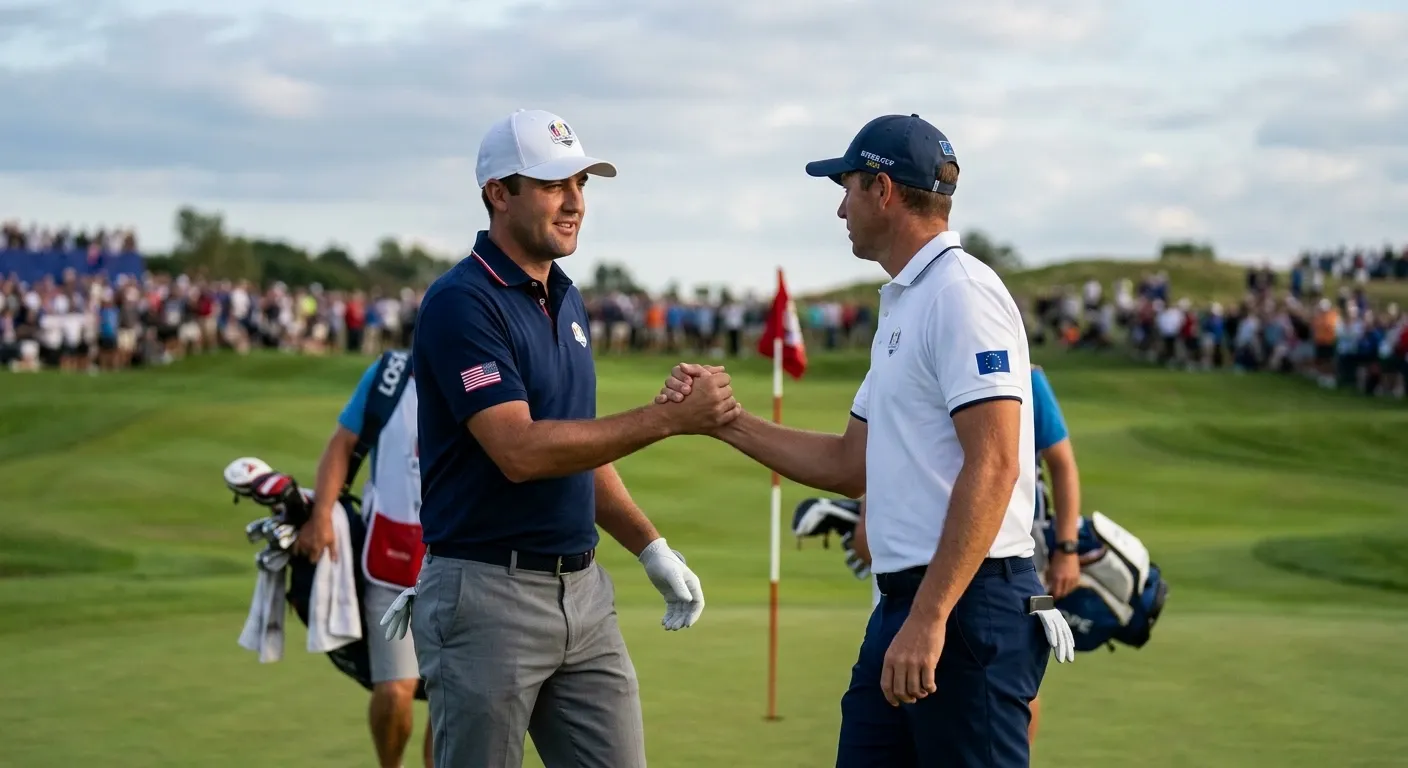
What matters more in match play, and in Ryder Cup specifically, is temperament and clutch performance under team pressure. Players who have historically converted under pressure in team environments—players with strong Ryder Cup records relative to their world ranking—carry an advantage in this format that SG analysis doesn’t capture. This is genuinely harder to quantify, but it’s real. The players who consistently outperform their expected match play results at the Ryder Cup tend to be competitive, combative personalities who thrive in a team environment, not the quiet, methodical ball-strikers who dominate individual stroke play.
The home advantage effect is substantial and well-documented. Since 1985, the home team has won 11 of 20 Ryder Cups—a winning rate of 55% that represents a meaningful statistical advantage beyond the 50% expected if home/away were neutral. The crowd effect, familiarity with the course type, travel advantage, and the psychological boost of playing in front of a national home crowd all contribute. In betting terms: always account for home advantage explicitly in your Ryder Cup analysis rather than treating it as noise.
Session-by-Session Ryder Cup Betting: Foursomes, Fourballs, and Singles Markets
The Ryder Cup’s session structure—alternating foursomes (alternate shot) and fourballs (best ball) across the first two days, followed by Sunday singles—creates distinct betting markets for each session. These markets are not equal in analytical tractability, and understanding which sessions offer the most systematic opportunity is essential for a structured approach.

Foursomes (alternate shot) is the format where individual SG analysis is least predictive and team pairing quality is most important. In alternate shot, the combined driving accuracy of a pair determines where the team’s approach shots come from; the combined putting form determines conversion rates. Pairings where one player is significantly stronger from tee to green than the other tend to underperform what their aggregate SG would predict, because the weaker player’s poor holes cascade into the subsequent approach shot positions. Captain’s ability to identify complementary pairings—rather than simply pairing the two best players—is a genuine factor in foursomes outcomes.

Fourballs (best ball) is the format where individual peak performance matters most. Each player plays their own ball, and the team’s score on each hole is the better of the two individual scores. This format rewards players who can produce single-hole flashes of brilliance—eagle putts, approach shots to three feet—rather than sustained consistency. It’s the format most accessible to SG-adjacent analysis because the individual performance data is most directly relevant. I find the most reliable fourballs analysis comes from identifying pairs where at least one player ranks in the top 30% of tour birdie-or-better rate on the prior season’s statistics.
Sunday singles is the most efficient Ryder Cup betting market and often the one with the worst value. By Sunday, the state of the overall match is known, which creates significant pricing distortions. When Team Europe needs 7.5 points from 12 singles to retain the Cup, the market prices European players as favourites across the board regardless of the individual match quality—which is a systematic overreaction. The most reliable singles market values I’ve found are in the mid-session matches (matches 5-8 of the 12) where the specific pairing quality matters more than the emotional state-of-match overlay.
Pairing Patterns and Historical Data: What the Numbers Actually Show
The Ryder Cup is one of the few events where historical team-level data provides genuinely useful betting signals, but that data needs to be interpreted carefully. The “home advantage is 55% since 1985” figure is useful context; the “this pair has played together 6 times and won 5” figure is a small sample that should be weighted accordingly.
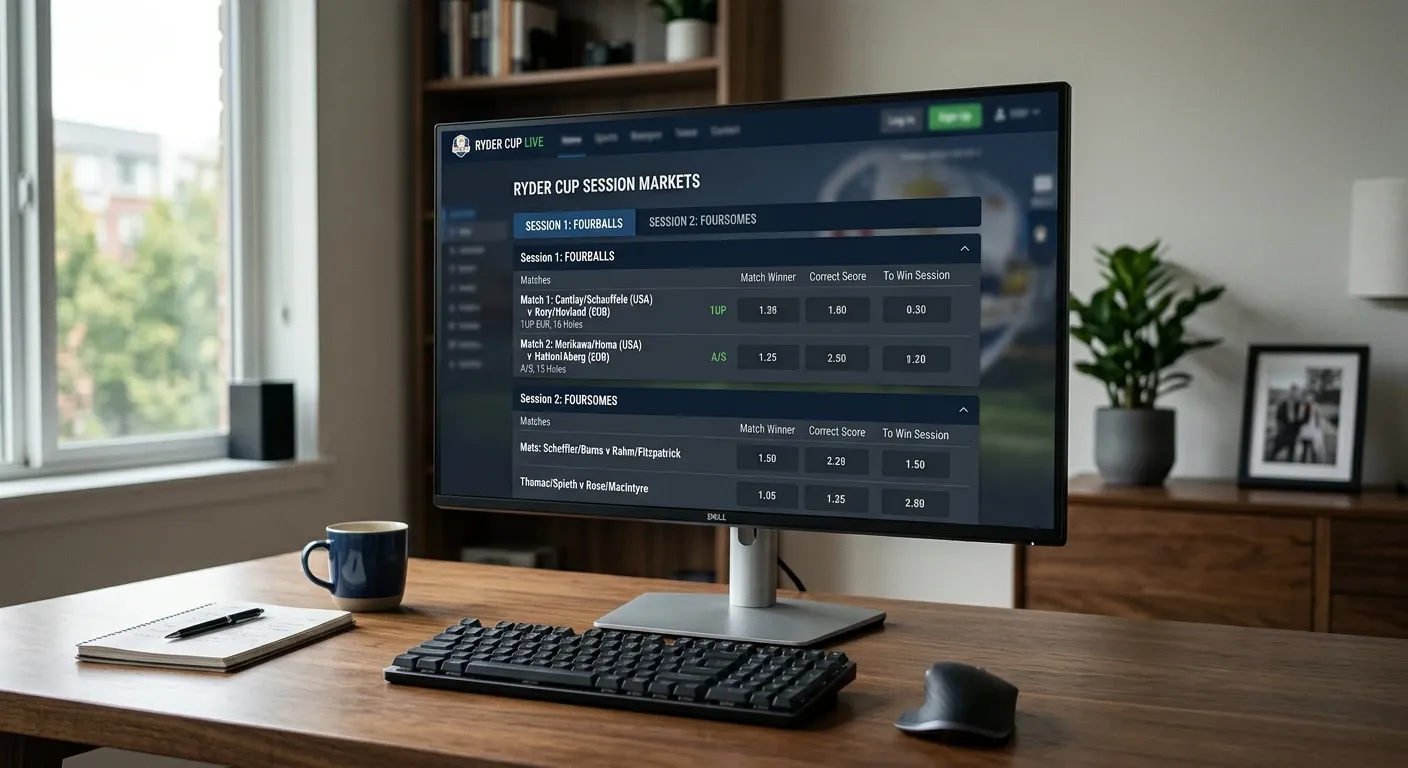
Pairing persistence—the tendency for captains to use the same pairings across multiple sessions—creates a useful signal for foursomes and fourballs betting. When a morning foursomes pairing has been announced and you observe that both players competed together the previous afternoon, you’re betting on a pairing the captain has already deemed successful. The market typically prices repeat pairings at similar odds to the raw player quality, without adequately accounting for the demonstrated chemistry advantage. Over multiple Ryder Cups, same-session repeat pairings outperform first-time pairings at equivalent player-quality levels by a statistically meaningful margin.
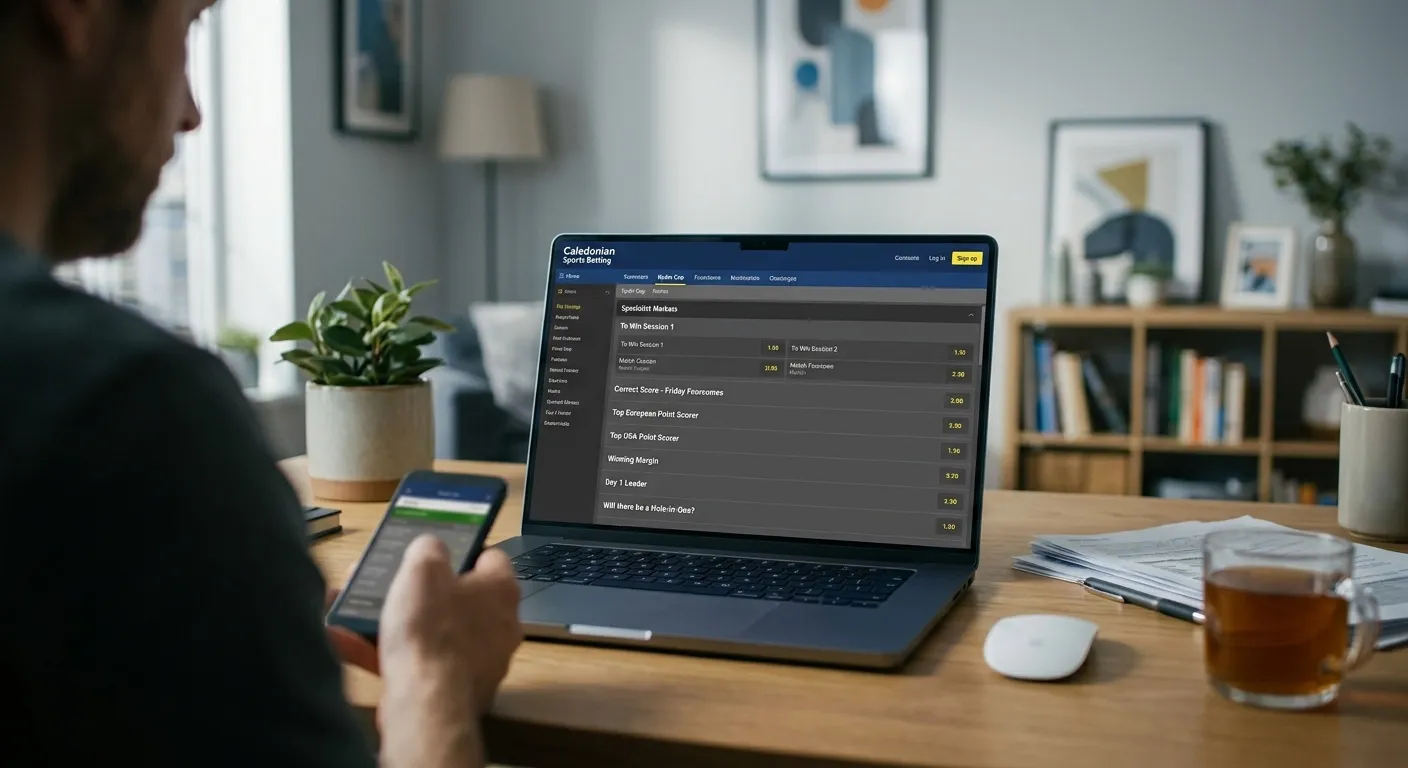
For an each-way golf betting system operator used to working in place markets, the Ryder Cup’s binary match outcomes (win, lose, or halve) require a completely different staking structure. The halved match outcome—where both players are backed at half the stated price—is an additional variance factor that doesn’t exist in stroke play. Building halved match probability into your Ryder Cup staking is essential; ignoring it understates your expected outlay and overstates your expected return on every match you bet.
Ryder Cup Betting: Questions
How does home advantage statistically affect Ryder Cup results?
Since 1985, the home team has won 11 of 20 Ryder Cups, a 55% win rate compared to the 50% expected if location were neutral. This home advantage effect is well-established across all team sports, but particularly pronounced in the Ryder Cup where crowd noise, course familiarity, and the weight of national expectation combine. When betting on the overall Ryder Cup result, always apply a 3-5 percentage point probability adjustment in favour of the home team versus the away team's equivalent player quality.
Is each-way betting available on Ryder Cup outright markets?
Most UK bookmakers don't offer traditional each-way markets on the Ryder Cup overall result because it's a binary win/lose/halve outcome -- there's no 'place' position equivalent. Some operators offer three-way markets (Europe win, USA win, tie/retained) which creates a three-outcome structure closer to a fixed-odds market. For individual match betting, a halved match is typically priced as a separate outcome alongside each player win, which functions as the third option in what is effectively a three-way match betting market.
Which Ryder Cup session markets typically offer the best value?
Fourballs session betting offers the most tractable value for analytical bettors because individual performance data (birdie-or-better rates, short-game excellence) is most directly relevant. Foursomes is dominated by pairing chemistry that's harder to quantify but where repeat pairing signals provide a genuine edge. Sunday singles can produce mispriced individual matches mid-session (matches 5-8) when the overall match state creates emotional overpricing on the trailing team's players. Avoid betting the leading team's players as favourites in singles when the overall match lead is large -- the market systematically overprices certainty of the state of play.
Golf Betting Guides
Golf Betting Odds Comparison UK: How Best-Price Shopping Compounds System Returns
The most underrated skill in systematic golf betting is not finding value selections—it's getting the best available price on the…
First Round Leader Golf Betting: A Systematic Approach to the FRL Market in the UK
The FRL market has a reputation problem. Casual bettors treat it as a novelty—a punt on who happens to have…
Antepost Golf Betting Strategy: How Early Prices Create Systematic Value Before the Field Is Set
The first time I backed a Major winner antepost, I got lucky. The second time, I had a system. There…
Three-Ball Golf Betting Strategy: Building a Systematic Edge in Head-to-Head Group Markets
Three-ball markets were the first place I ever found a genuine, repeatable edge in golf betting. Not because they're easier…
