
Golf In-Play Betting Strategy UK: How to Find Systematic Value in Live Golf Markets
 Available in US
In-play golf betting is the hardest market to beat systematically, and I say that as someone who has been trying for years. The combination of low liquidity on UK bookmaker platforms, frequent price suspensions around shots, and the sheer informational advantage held by operators with live shot tracking data creates a structural challenge that doesn’t exist in pre-tournament markets. None of that means in-play golf betting has no systematic value—it does. But the approach required is fundamentally different from pre-round analysis, and most bettors who struggle with in-play markets are applying pre-round logic to a real-time context where it doesn’t fit.
What I want to cover here is not how to react faster to leaderboard movements—that’s a losing strategy against operators with faster data. What I want to cover is how to identify specific in-play scenarios where the bookmaker’s pricing model lags behind observable market signals, and how to manage stake and cash-out decisions systematically rather than emotionally. Those two skills, developed deliberately, turn in-play golf from a volatility trap into a manageable part of a broader betting portfolio.
In-Play Golf Market Dynamics: What the Bookmaker Knows That You Don’t
The fundamental asymmetry of in-play betting is data lag. UK bookmakers use live shot tracking APIs from the PGA Tour and DP World Tour that provide hole-by-hole shot data with a latency of 10-30 seconds for major events. Their pricing models update continuously from this feed. The public-facing leaderboard you’re watching—whether on the tour app, the Golf Channel, or a broadcast—operates on a 30-90 second delay and lacks the shot-quality context the operator has in their model.
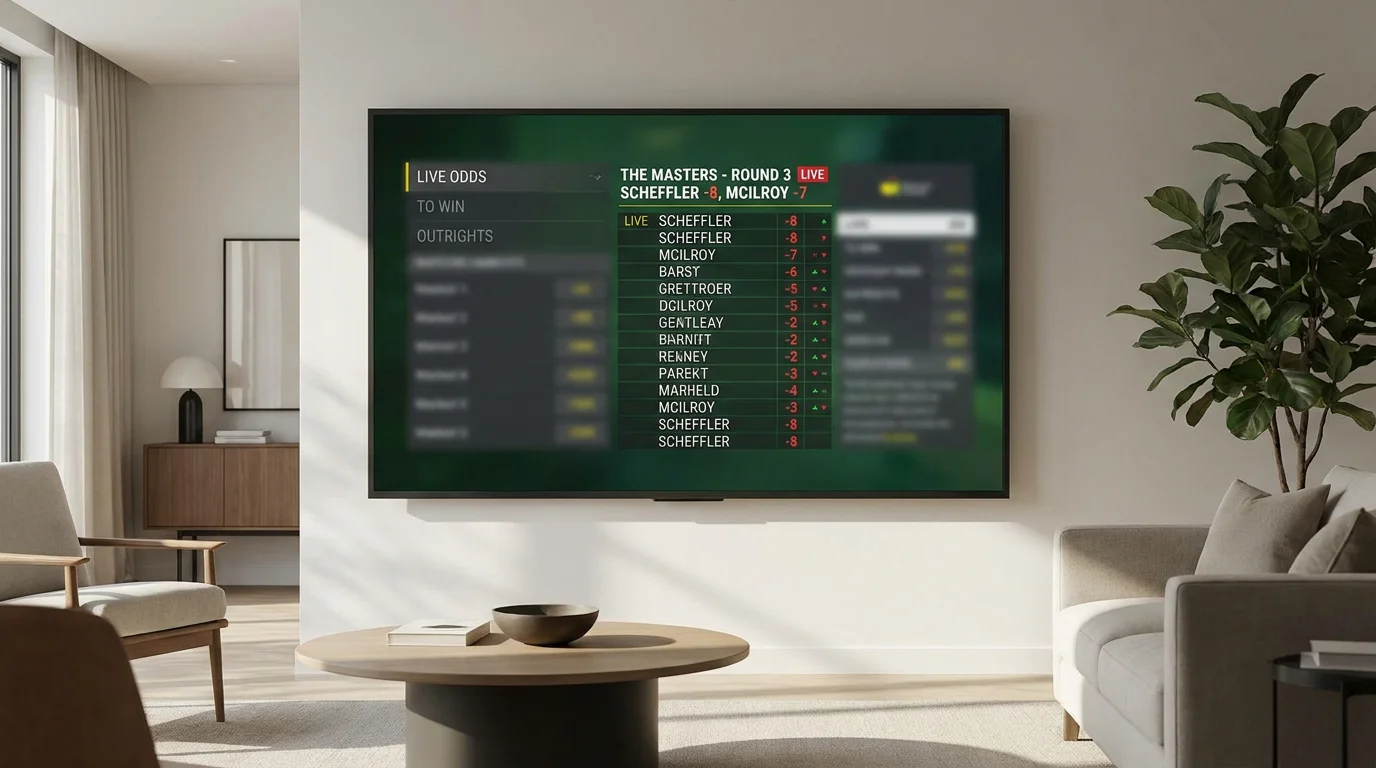
This means that reacting to leaderboard changes as they appear on your screen is almost always too late. A player who birdies 15 to move within two of the lead will have their in-play price adjusted before that information reaches you visibly. The operator has already moved. Chasing in-play prices based on visible leaderboard movements is how most in-play golf bettors lose money—not through bad analysis, but through competing on a data playing field where the bookmaker has a structural advantage.
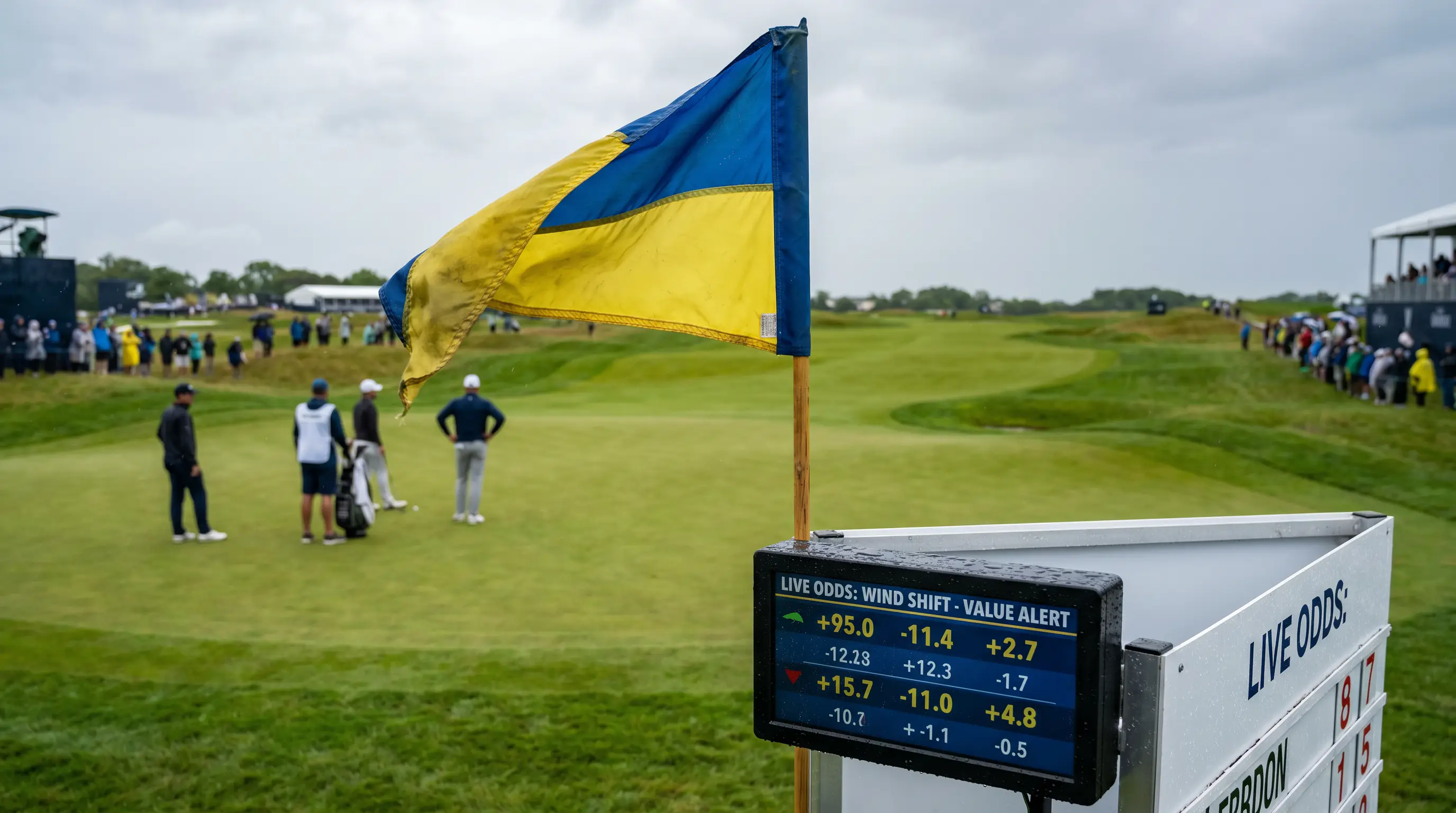
Where the in-play market creates genuine opportunity is in the delay between score events and market calibration for players not currently in the spotlight. When a leader makes a dramatic move, the operator’s attention and model resources concentrate on that player and their immediate pursuers. Players in the middle of the leaderboard—those three to six shots back in a tightly bunched field—can be mis-priced for 60-120 seconds as the model prioritises the market leaders. That brief window is where systematic in-play value occasionally opens.
Identifying these moments requires pre-round preparation, not in-play reaction. I build a target list before each round of the players who are most likely to be the “mispriced middle” candidates—those whose SG profile suggests they could make a significant move, but who are not currently in the lead and therefore not receiving pricing model attention. When the leaderboard compresses around a lead change, I check my target list first, not the headline odds.
Cash-Out Discipline: The In-Play Decision That Destroys Most Systems
Cash-out is the feature that costs systematic in-play golf bettors the most money, and the mechanism is counterintuitive. It’s not that cash-out is always bad—it’s that the way bookmakers offer cash-out creates a systematic bias toward under-extracting value from winning positions.
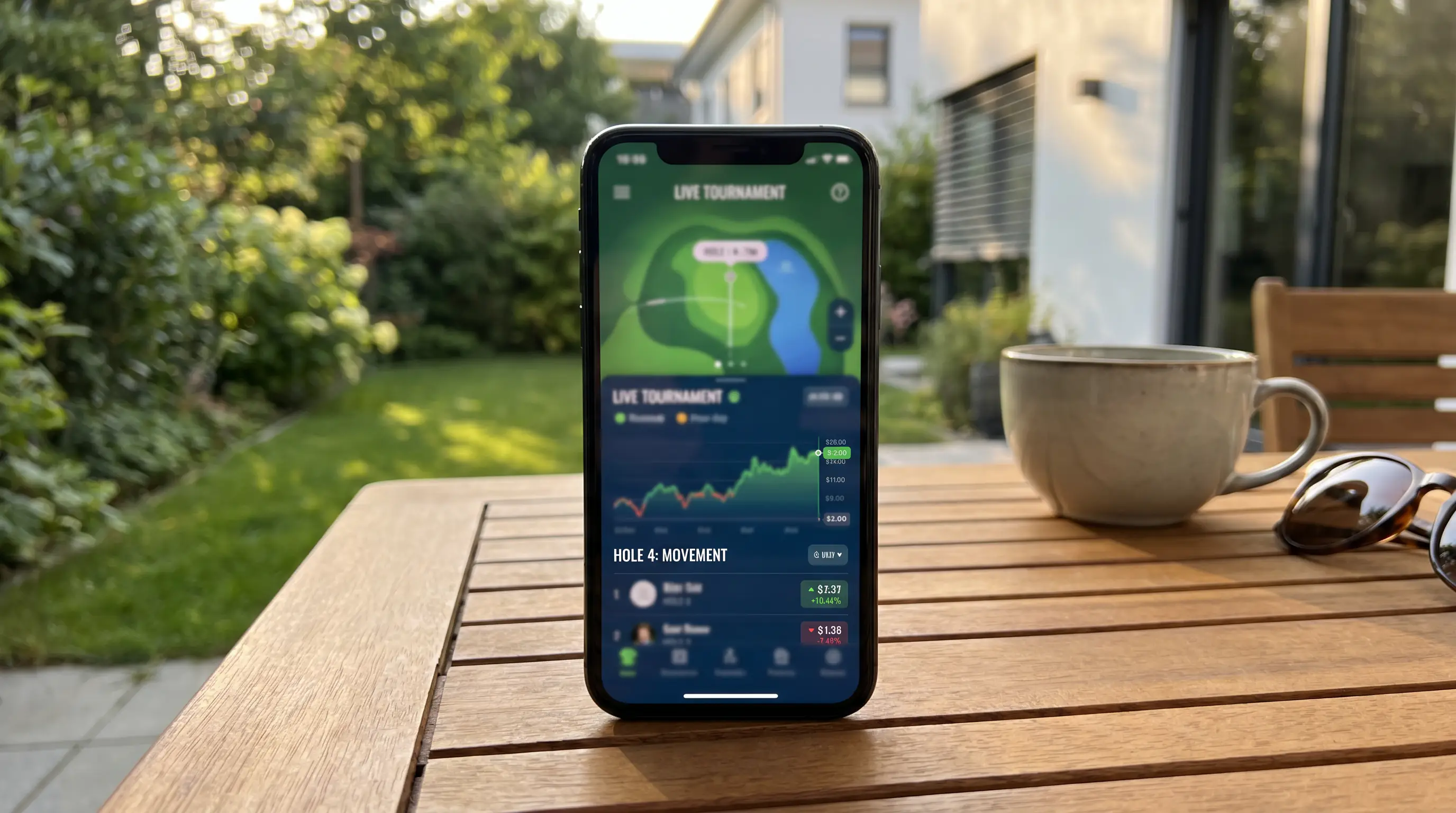
The cash-out prices offered mid-round are generated by the operator’s model, which incorporates real-time course position, remaining holes, field composition, and historical completion rates. They are designed to offer a price that is marginally below the true expected value of your position—enough to create a mathematical edge for the operator on every accepted cash-out, while remaining attractive enough that bettors will click. The typical in-play golf cash-out is priced at 91-94% of the estimated fair value of your position, according to industry analysis of cash-out pricing models.
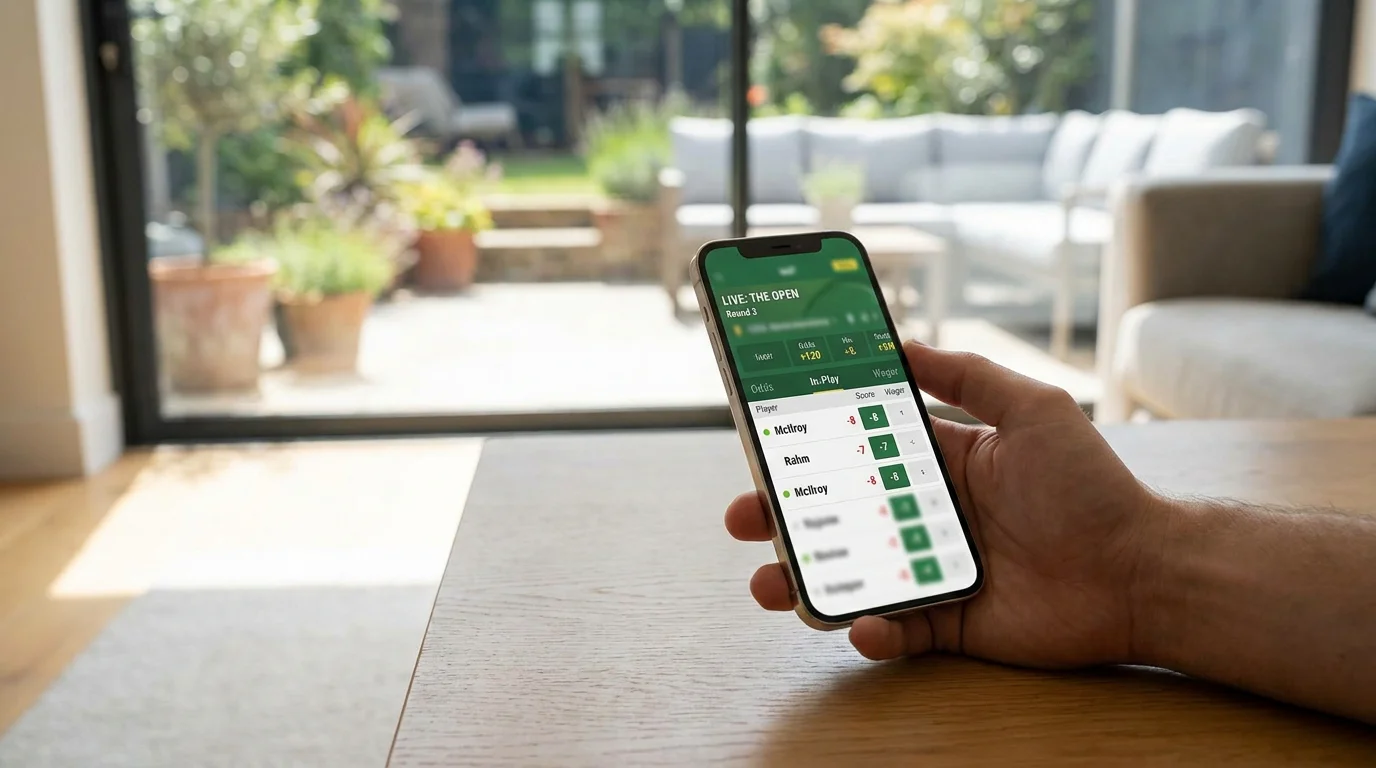
The systematic error most bettors make is accepting cash-out at moments of peak emotional stress—when their outright selection is one shot ahead with three holes left, or when a leader drops a shot and the cash-out amount starts declining visibly. Both scenarios trigger the same emotional response: lock in the return now. But both are typically the moments when the expected value of the position is highest, and accepting cash-out extracts the lowest return relative to the true value of holding.
My cash-out rule is binary and decided before the round, not during it. If a player I backed at 25/1 pre-round moves to a price equivalent to 4/1 remaining with 18 holes left, I’ve decided in advance whether this is a position I cash out. The decision criteria: if the player’s underlying SG performance in the current round suggests the price movement is supported by genuine ball-striking quality, I hold. If the price has moved primarily on leaderboard position without underlying SG justification—a hot putter, a favourable bounce, a competitor collapse—I’ll consider a partial cash-out to de-risk the tail outcome. The decision is never made in-round on pure emotion.
Live SG Reading: What You Can Track Without Premium Data Feeds
The most common objection I hear to systematic in-play golf betting is data access: “I don’t have live SG feeds, so I can’t track performance quality in real time.” This is only partially true. While premium live SG data (the kind DataGolf provides to subscribers) does require a paid subscription, a meaningful amount of performance quality signal is available through free public sources with a 30-90 second delay.
The PGA Tour’s ShotLink data is available through the official tour app with a brief delay. Shot-by-shot distance and proximity-to-pin data is publicly visible, and from that data you can construct a rough per-round SG:APP proxy by tracking iron approach distance and hole proximity. It’s not the precision of a DataGolf live feed, but it’s enough to distinguish between a player who is leading because of exceptional approach play versus one who has holed out from off the green three times. Those are different propositions for the remaining holes.

The single most valuable free in-play signal for systematic betting is hole-by-hole birdie-or-better opportunity creation versus conversion. A player who has created birdie opportunities on 12 of 14 holes and converted 6 is in a different position than a player who has created opportunities on 6 holes and converted 6. The first player is generating quality but running hot on conversion—expect regression. The second player is converting at a sustainable rate relative to opportunity. The leaderboard position may be identical; the in-play expected value is not.
For DP World Tour events, live data access is more limited, which is one reason I reduce in-play activity significantly on European circuit events. Without reliable shot-quality data, in-play golf betting on the DP World Tour reverts to leaderboard-chasing, which is a losing approach. The data asymmetry is too large.
Golf In-Play Betting: Your Questions
Which UK bookmakers offer the best in-play golf markets?
bet365 offers the broadest in-play golf coverage, with live streaming for PGA Tour events and continuous in-play pricing across all rounds of major tournaments. William Hill and Betfair Exchange also offer competitive in-play golf markets, with the Exchange providing better prices but lower liquidity outside Majors. For systematic in-play betting, bet365's combination of coverage, pricing depth, and cash-out functionality makes it the primary platform, with Betfair Exchange used for value checks when liquidity permits.
Can you bet golf in-play on mobile apps in the UK?
Yes, all major UK bookmakers offer full in-play golf functionality on their mobile apps. However, the speed of price updates and the responsiveness of the cash-out function varies significantly between platforms. bet365's mobile app updates prices with less lag than most competitors during major events. For systematic in-play betting, test the app on a standard event before committing to a Major, as server load during high-traffic events can cause price display delays that affect your ability to act on in-play opportunities.
When in a round is in-play golf betting most valuable?
The optimal windows for systematic in-play value are the opening 4-6 holes of each round (when the pricing model is still calibrating from the overnight market) and holes 13-15 of the round (when field compression or separation creates pricing gaps around players who have moved into or out of contention). The opening holes offer the best opportunity because the model is transitioning from pre-round to in-play pricing and is often slow to adjust to early SG signals. Mid-round is typically the most efficiently priced period.
Golf Betting Guides
Best Golf Tipsters UK: How to Evaluate a Service Before You Follow Its Picks
I have a professional reluctance to recommend tipster services, not because they're all fraudulent—some are entirely legitimate—but because the evaluation…
Golf Betting Pre-Tournament Checklist: The 7-Step Process Before Every Systematic Pick
The worst bets I've ever placed all share one characteristic: I placed them too quickly. Saw a price I liked,…
Golf Betting Driving Distance Stats: When Power Off the Tee Creates a Systematic Edge
There's a version of the "power advantage" argument in golf that gets recycled endlessly in betting previews — "this course…
Golf Betting Value Finder: How to Calculate Expected Value Before Every Systematic Pick
Nine years into this, I still do the same arithmetic before every single outright pick. Not because the maths is…
