
Major Golf Tournaments Betting UK: How the Four Majors Demand Different Systematic Approaches
 Available in US
There’s a mistake I made for the first several years of serious golf betting that I see repeated constantly by otherwise thoughtful systematic bettors: treating the four Majors as a single category with a single analytical approach. The Masters, the US Open, The Open Championship, and the PGA Championship are four fundamentally different tournaments—different venue types, different player profile demands, different historical pattern emphases, and different market dynamics. A system built to find value in Masters outrights requires genuine modification before it generates edge at Hoylake or Oakmont. Let me walk through each one specifically.
The Masters: Where Course History Dominates and Ball-Strikers Win
Augusta National is the Major where course-specific historical data carries the most analytical weight of any event on the professional calendar. The DataGolf course history tool shows this explicitly: Augusta’s player-specific historical correlation with current performance is significantly stronger than at any other PGA Tour venue. Creative ball-strikers—players who can shape shots both ways, who attack from difficult angles, who thrive under the specific pressure of Augusta’s back nine Sunday—win the Masters disproportionately relative to their raw SG ranking.

Strokes gained approach (SG:APP) is the single strongest predictive category for Masters performance, with evidence suggesting approach play accounts for approximately 30% of the performance advantage for top-5 finishers in recent editions. In five of five recent years, none of the Masters winners ranked in the top 10 of the field for SG putting—confirming that this is not a tournament decided by hot putting. It’s decided by approach excellence on a course that demands creativity from precise positions.

For Masters betting specifically, I run a separate analytical filter that weights Augusta course history at approximately 25-30% of the total assessment, significantly higher than the 10-15% weight I’d apply at a generic PGA Tour venue. Players with two or more previous Augusta top-10 finishes who remain in prime form are consistently underpriced relative to their win probability. The market tends to discount Augusta course history too heavily in favour of recent worldwide SG numbers, creating a persistent mispricing that Augusta-literate analysis can exploit.
The Masters markets open earlier and tighten faster than any other Major. Prices are reasonable for approximately three weeks after market opening; from the moment media preview season begins, the headline names compress rapidly. The nine percent of UK gamblers who bet specifically on the Masters—it’s one of the most widely bet single events in UK golf—concentrate public money on the most recognisable names at the expense of the less-publicised course-history value selections.
The Open Championship: Where Links Expertise Is the Primary Filter
The Open Championship is the Major with the widest analytical gap between systematic analysis and bookmaker pricing. The reason: Open betting attracts the broadest UK public interest of any golf event, driving significant volume onto recognisable names. Players who dominate the world rankings but have limited links experience are frequently overpriced because the public backs them on name recognition rather than course-type relevance. That overpricing creates the most consistent Major betting value for a links-literate systematic analyst.

The player profile that wins The Open has been remarkably consistent: elite ball-striking from tee to green with controlled trajectory, strong wind-game credentials, above-average creativity around the greens for bump-and-run approaches, and psychological comfort with the unpredictability of links bounces. SG:OTT on links-type courses, specifically from DP World Tour Scottish and Irish swing events and any previous Open Championship appearances, is the most directly relevant data point for The Open analysis. I give this approximately 40% weight in my Open-specific model, versus 20% in a standard parkland event analysis.

The Open bookmaker market opens approximately 12 weeks before the event and shows the most aggressive price compression of any Major—partly because the betting volume is highest and partly because the UK public’s emotional engagement drives early money onto favourites. The best each-way value at The Open is typically available in the first two to three weeks after market opening, on links-specialist players ranked between 20th and 80th in the world who haven’t yet attracted significant media preview coverage.
The US Open and PGA Championship: Accuracy and Specific Venue Demands
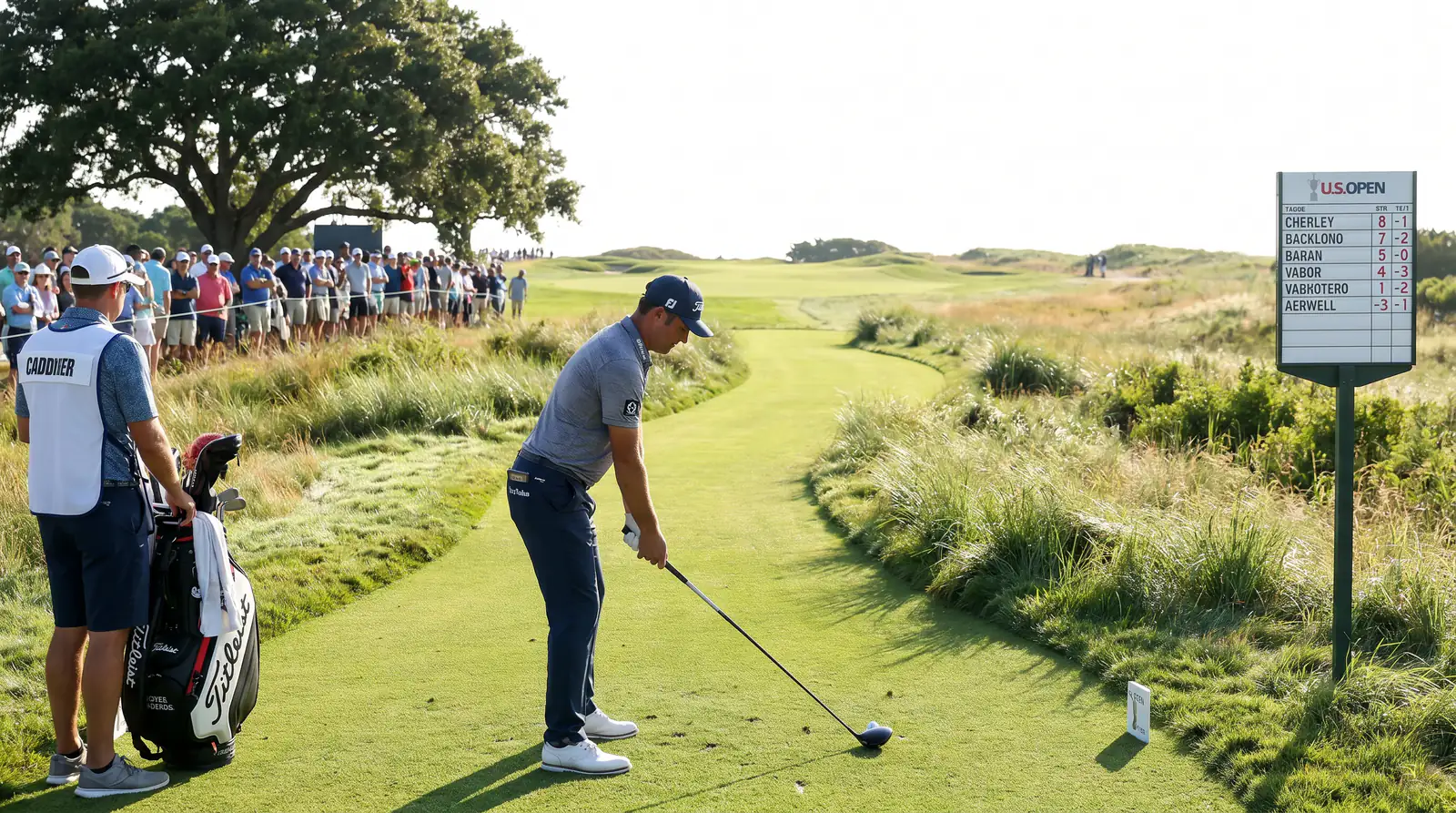
The US Open has a distinctive profile driven by USGA setup philosophy: tight fairways, rough penalising wayward drives, and pin positions that punish aggressive approaches. Driving accuracy and approach precision under pressure determine most US Open outcomes. SG:OTT accuracy-adjusted metrics (specifically fairways hit percentage combined with approach proximity) are the most relevant statistics for US Open analysis, weighted considerably above raw distance and total SG:OTT.
The PGA Championship has historically been the most player-field-neutral of the four Majors—the venues vary more widely in character than the other three, and the correlation between specific player profiles and PGA Championship success is weaker. Players with elite ball-striking across all course types produce the most consistent PGA Championship results. This makes the PGA Championship the Major where a standard SG-based analytical model transfers most directly without venue-specific modification.
For all four Majors, the each-way terms available from UK bookmakers are typically more generous than at regular tour events: Coral’s 10-place standard terms apply at Majors; bet365’s Each Way Extra is available and often offers 10-12 additional places; BoyleSports Pick Your Place reaches its maximum at Major Championship weeks. The combination of enhanced each-way terms and the larger-than-usual bettor interest in Majors creates the best overall each-way value structure in the golf calendar. Maximising your analysis focus on Major weeks, and ensuring you access the best available terms before placing, returns proportionally higher expected value than equivalent effort applied to standard tour events.
Major Golf Betting: Questions
Are each-way terms better at Major golf tournaments than regular Tour events?
Yes, consistently. At Major Championships, UK bookmakers compete aggressively for bettor volume, which drives place term enhancements beyond what's available at standard tour events. Coral offers 10 places as a standard Major terms offer; bet365's Each Way Extra at Majors frequently provides 10-14 additional places above standard; BoyleSports Pick Your Place allows selection of 10-12 places at Majors. The combination of large fields (150-156 players) and competitive term enhancement makes Major each-way betting the highest structural value window in the golf betting calendar.
How far in advance do UK bookmakers open Major golf betting markets?
The Masters market typically opens 12-14 weeks before the first round, usually in January. The Open Championship opens approximately 12 weeks out. US Open and PGA Championship markets open 10-12 weeks before the event. Early prices in the first two to three weeks after market opening are least adjusted for public money and media narrative, making this the optimal window for systematic antepost positions. By six weeks before any Major, significant price compression has typically occurred on the most recognisable names.
Which Major has historically produced the most value for systematic each-way bettors?
The Open Championship has historically produced the most each-way value for UK systematic bettors, for two reasons: it attracts the highest UK public betting volume (which drives more emotional money onto recognisable names and away from links specialists), and the each-way terms are among the most competitive of any Major. The links-specific course demands create pricing gaps between the public's name-recognition selections and the genuinely best-suited players that a data-literate Open betting system can consistently identify.
Golf Betting Guides
Golf Outright Betting Strategy UK: How to Find Value in Winner Markets Without Each-Way Cover
Backing a golf tournament winner outright—no each-way cover, no place insurance, just the winner—is the most honest test of your…
UK Bookmaker Account Restrictions in Golf Betting: What the Gambling Commission Data Reveals
Account restrictions are the most uncomfortable topic in systematic golf betting, and the most important one to understand clearly. I've…
Golf In-Play Betting Strategy UK: How to Find Systematic Value in Live Golf Markets
In-play golf betting is the hardest market to beat systematically, and I say that as someone who has been trying…
Golf Betting for Beginners UK: Understanding the Markets Before You Build a System
If you've never bet on golf before and you're trying to figure out where to start, I want to save…
